Is Safeguarding a “Western” Concept?
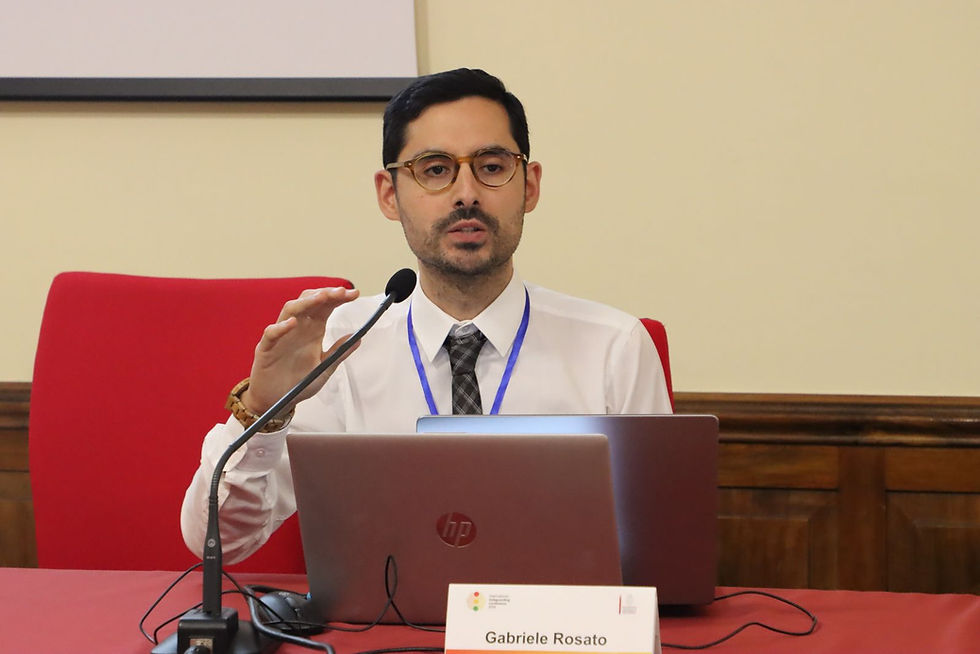
On 19 June 2026, I spoke at the International Safeguarding Conference (ISC), hosted by the Pontifical Gregorian University in Rome.
The ISC brings together researchers, practitioners, advocates, and survivors from across the world who share a common commitment: protecting children and vulnerable adults from abuse.
My presentation will be part of the Safeguarding Research Lab and is entitled:
“Is Safeguarding a ‘Western’ Concept? Toward a Decolonial Praxis of Translation.”
An uncomfortable (but necessary) question
Safeguarding is often presented as a universal responsibility. Protecting people from abuse is, of course, a goal that transcends cultures. Yet, through my work in international and multicultural contexts, I have noticed that the word safeguarding does not carry the same meaning everywhere.
In some places it is perceived as bureaucracy. Elsewhere, as an imported Western model.
In others, as institutional language disconnected from everyday community life. This raises what may seem like a provocative question: Is safeguarding a Western concept?
A response that is neither “yes” nor “no”
My presentation argues that the question cannot be answered with a simple yes or no.
Instead, my answer takes one of two forms: “Yes, but…” or “No, but…”. The commitment to protecting people from violence is not exclusive to any one culture.
However, the policies, professional vocabulary, risk frameworks, and institutional models through which safeguarding is commonly implemented today have emerged from particular historical and cultural contexts, especially within Europe and the English-speaking world.
Recognising these origins does not mean relativising abuse or questioning universal principles of protection. Rather, it invites us to ask how these principles can be shared without simply being exported.

From transplantation to translation
One of the central ideas of my presentation is that safeguarding should be understood not as transplantation, but as translation.
Translation does not change the principles.
It makes them meaningful, trustworthy, and usable across different cultural settings.
This requires dialogue, humility, and a willingness to recognise multiple ways of knowing—including oral traditions, community knowledge, and survivors’ lived expertise.
An everyday practice
Rather than offering definitive answers, this presentation invites us to reflect on our daily practice. How do we communicate safeguarding? Who participates in shaping safeguarding procedures? What language do we use?
Who is left out?
Perhaps the most important question is not whether safeguarding is a Western concept. It is whether we are willing to make safeguarding genuinely intercultural.


Comments